

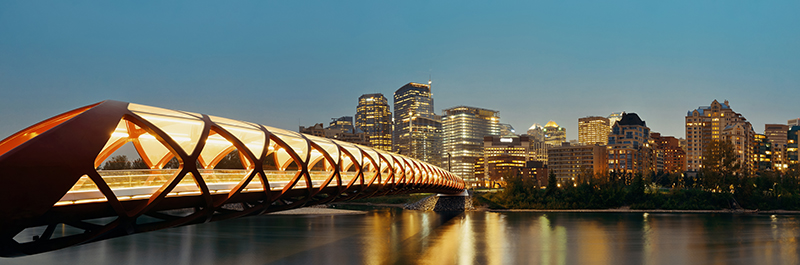
What’s Happening in Downtown Calgary?
Calgary’s downtown continues to undergo a major transformation, with the City accelerating its push to reimagine millions of square feet of underused office space. What began as a response to record-high vacancy levels has evolved into one of the most ambitious urban redevelopment initiatives in Canada.
A Growing Wave of Office-to-Residential Conversions
At a recent announcement in the Beltline, Mayor Jeromy Farkas highlighted the next chapter of Calgary’s revitalization strategy. Nine additional office conversion projects have been approved, bringing close to 1,000 new homes to the city’s core—including a mix of rental units and a hostel project along 5th Avenue SE.
These latest approvals represent the redevelopment of nearly one million square feet of former office space. According to the City, progress toward its long-term goal is well underway: nearly half of the six million square feet targeted for conversion is already committed or under construction.
How the Incentive Program Works
Calgary’s downtown development incentive program is the backbone of this transformation. Property owners are eligible for a grant of $75 per square foot, up to a maximum of $15 million, to repurpose aging office buildings into residential or mixed-use spaces.
Launched in 2021 as part of a 10-year downtown revitalization plan, the program was created to counter the decline in office property values following the 2014 energy downturn. By shifting away from a reliance on traditional office towers, the City hopes to create a more diverse and resilient downtown economy.
The financial results so far have been significant. The City reports investing just over $200 million, which has leveraged more than $800 million in private development—an estimated $1.4 billion economic impact.
What’s Been Built So Far
Six conversion projects have been completed to date, adding:
• 490 new homes
• 226 hotel rooms
These represent only a portion of what’s in the pipeline. Altogether, current approvals will eventually convert over 2.6 million square feet of vacant office space and create more than 2,600 new residential units.
If the City reaches the full six-million-square-foot target by 2031, downtown office vacancy—which currently sits around 30 percent—could decrease by roughly 10 percentage points.
Demand Continues to Exceed Available Funding
Interest in the program remains strong. In fact, every intake window to date has been oversubscribed.
After the initial $153 million fund was fully allocated, the program paused in late 2023. It reopened in 2024 with an additional $53 million, and the most recent application round closed October 31, 2024.
City council will soon debate whether to add another $40 million in the upcoming 2026 budget. The mayor has signaled strong support, calling the incentive “one of the best investments the City can make,” given its high economic return.
Developers See Reduced Risk and More Certainty
Private developers continue to praise the program for creating stability in a complex market. At the announcement, Crestpoint Real Estate Investments—currently redeveloping the former TransAlta headquarters—emphasized the importance of predictable incentives in moving large projects forward.
Their Beltline redevelopment will convert approximately 133,000 square feet into 488 rental units by 2028, including 73 below-market homes. Crestpoint noted that without the City’s incentive, the economics of delivering two towers simultaneously would have been far more challenging.
What This Means for Calgary
Downtown Calgary is becoming far more residential, more mixed-use, and more dynamic than it was a decade ago. The shift reflects both economic necessity and long-term community-building goals: more people living downtown means more vibrancy, more small businesses, and more stability.
With new homes, hotels, and community spaces replacing empty office floors, the city is charting a new identity for its core—one that is less dependent on a single industry and more oriented toward urban living and modern mixed-use neighbourhoods.
The next several years will determine how quickly this transformation unfolds, but the momentum is clearly building.