

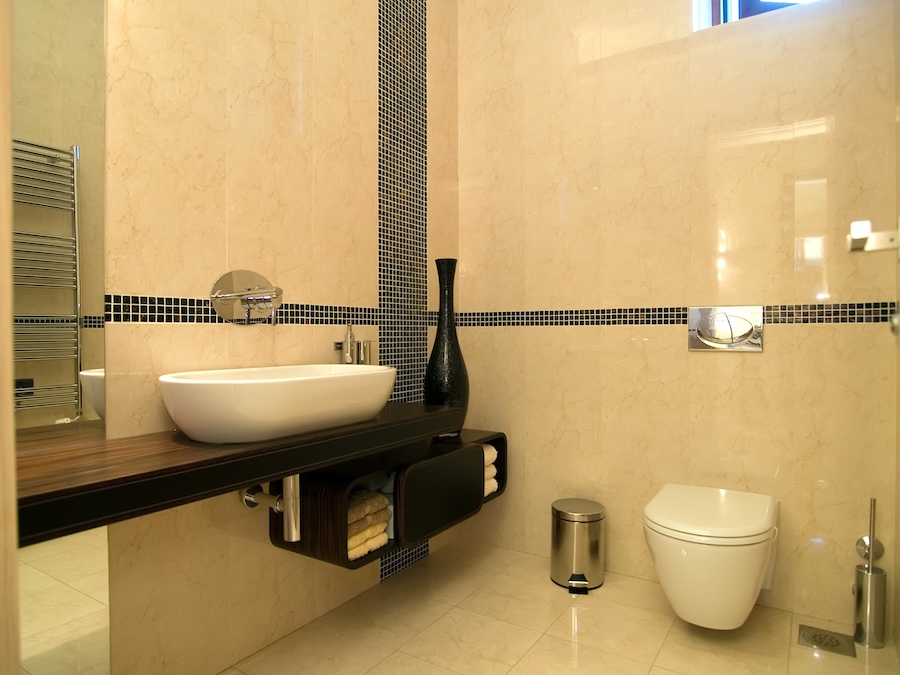
Rethinking the Powder Room: Why This Small Space Deserves Big Attention
In most homes, the powder room tends to be overlooked. It is compact, often positioned out of sight, and used only briefly. Yet despite its size, it plays a surprisingly important role. For many homes, it is the only washroom guests will ever see. That alone makes it one of the most influential spaces in shaping first impressions.
And yet, it is frequently treated as an afterthought—kept neutral, minimally styled, and designed purely for function.
That is a missed opportunity.
When approached with intention, the powder room can become one of the most memorable spaces in a home. It offers a rare chance to step outside the usual design constraints and create something distinctive, expressive, and refined—without the risk or cost associated with larger rooms.
A Place to Do Something Different
One of the biggest advantages of a powder room is the creative flexibility it allows. Unlike kitchens or living spaces—where cohesion and long-term livability are top priorities—the powder room can afford to be more experimental.
Because it is used for short periods, the design does not need to cater to extended comfort. Instead, it can focus on creating an impression.
This opens the door to bolder decisions. Darker colour palettes, high-contrast finishes, and more dramatic materials can all be introduced without overwhelming the home as a whole. A space that is otherwise light and neutral can support a powder room that is rich in tone and layered in texture.
Consider deep navy or charcoal walls, or even a fully saturated space where walls, trim, and ceiling are all treated in the same colour. Add in materials like heavily veined stone, textured wallpaper, or a vanity with a raw or sculptural finish, and the room begins to feel more curated than conventional.
That said, contrast should still feel intentional. Even if the powder room diverges from the rest of the home, there should be subtle connections—perhaps through shared finishes, complementary tones, or consistent detailing. These small design cues ensure the space feels integrated rather than disconnected.
Designing with a Hospitality Mindset
Another effective approach is to think beyond residential design altogether and take inspiration from boutique hotels.
In hospitality settings, even the smallest spaces are carefully considered. Powder rooms are designed to feel polished, immersive, and thoughtfully detailed. Bringing that same mindset into a home can elevate the experience significantly.
Rather than focusing strictly on utility, consider how the space feels.
Simple enhancements can make a meaningful difference:
- A small arrangement of fresh flowers
- A framed piece of artwork or a unique wall feature
- High-quality hand towels
- Carefully selected accessories that feel deliberate rather than decorative
Storage can be minimized or concealed entirely, allowing the design to take precedence. Floating vanities, furniture-style cabinetry, or custom millwork can introduce character while maintaining a clean aesthetic.
Lighting is especially important. Instead of relying solely on overhead fixtures, layered lighting—such as sconces or a statement pendant—can create a softer, more refined atmosphere. These elements not only improve functionality but also contribute to the overall experience of the space.
Of course, practicality still matters. Ventilation, durable materials, and ease of maintenance should not be overlooked. The goal is to create a room that performs well while presenting beautifully.
A Low-Risk Opportunity to Be Bold
Many homeowners hesitate to make bold design choices in primary living areas, where mistakes can be costly and difficult to reverse. The powder room offers a different equation.
Because of its size, the investment is relatively modest. Because of its limited use, wear and tear are reduced. And because it is separate from the main living areas, it can take on its own identity.
This makes it the ideal place to experiment.
Striking wallpaper, strong patterns, or unconventional colour combinations can work exceptionally well in a smaller setting. Designs that might feel overwhelming in a larger room often feel balanced and impactful here.
Texture can also play a significant role. Materials like plaster, stone, fluted wood, or embossed wall coverings introduce depth and visual interest in a compact footprint.
Perhaps most importantly, these choices are not permanent. Updating a powder room is typically far more manageable than renovating a kitchen or full bathroom. A change in wallpaper, lighting, or fixtures can completely refresh the space without major disruption.
This flexibility allows homeowners to embrace trends or personal preferences without long-term commitment.
Designing for Impact, Not Size
There is a common belief that small spaces should be kept simple. In reality, smaller rooms often benefit from more deliberate design.
Because the powder room is limited in size, every element becomes more noticeable. Each decision—whether it relates to colour, materials, or layout—carries more weight.
Rather than trying to make the space feel larger, it is often more effective to make it feel purposeful.
This might include:
- A bold mirror that acts as a focal point
- Statement lighting that doubles as a design feature
- Unique fixtures that feel more like sculptural pieces
- Walls that incorporate pattern, texture, or depth
Even the ceiling can be used creatively, whether through colour or subtle detailing.
When each element is considered carefully, the result is a space that feels complete—regardless of its size.
Why It Matters from a Property Perspective
From a property management and investment standpoint, the powder room is more important than it may seem.
In competitive markets, presentation plays a significant role in attracting quality tenants and buyers. While major upgrades like kitchens and flooring are often prioritized, smaller details can influence perception just as strongly.
A well-designed powder room signals attention to detail. It suggests that the property has been thoughtfully maintained and positioned with care.
For higher-end rental properties, particularly those targeting executive tenants, these details can help justify stronger rental values and support longer tenancies. For resale, they can contribute to a more polished overall impression, helping a property stand out.
Importantly, the cost of upgrading a powder room is typically modest compared to larger renovations. This makes it a strategic area for investment, offering a strong return in terms of perceived value.
Final Thoughts
The powder room may be one of the smallest spaces in a home, but it carries disproportionate influence.
It is a place where design can be expressive without being overwhelming. Where creativity can be explored without significant risk. And where thoughtful choices can leave a lasting impression.
When given proper attention, the powder room becomes more than just a functional necessity—it becomes a moment within the home. A space that reflects personality, intention, and a level of care that extends beyond the obvious.
And in many cases, it is exactly these details that people remember most.