

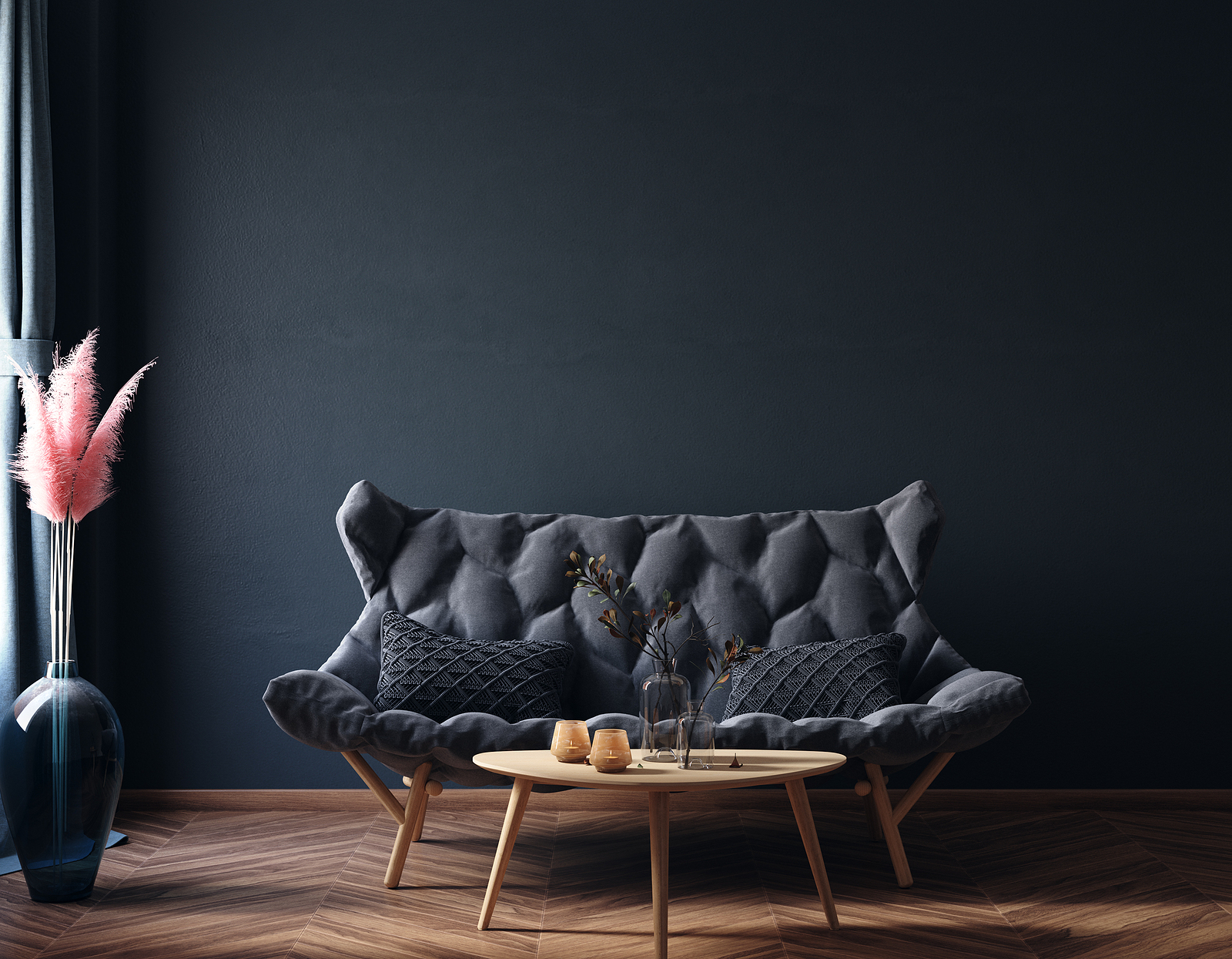
Back in Black: Why Dark Interiors Are Defining Modern Luxury
Black is no longer reserved for trim, iron railings, or the occasional accent wall. Today, it is stepping confidently into the spotlight — anchoring rooms, elevating finishes, and transforming ordinary interiors into dramatic, design-forward spaces.
Once considered bold or even risky, black has become one of the most sophisticated neutrals in contemporary design. Moody yet refined, powerful yet calming, it offers depth that lighter palettes simply cannot replicate. When layered thoughtfully, black interiors feel intentional, grounded, and unmistakably luxurious.
Designers across North America are embracing this “back in black” movement — not as a fleeting trend, but as a timeless evolution.
Why Black Works
Black has a unique ability to do two things at once:
Anchor a space
Highlight everything around it
It sharpens contrast, intensifies texture, and allows materials like marble, brass, wood, and leather to stand out in relief. Far from feeling heavy, black can actually clarify a room’s architecture by emphasizing lines, mouldings, and proportions.
Unlike white — which reflects light — black absorbs it. That absorption creates intimacy. A room wrapped in deep charcoal or inky onyx feels enveloping, almost cocoon-like. It invites pause.
And contrary to popular belief, black does not require expansive windows or abundant daylight. In fact, in smaller rooms or windowless spaces, it can feel surprisingly rich and intentional.
The Moody Den: Intimate by Design
Few spaces benefit from black more than a den or lounge. These are rooms meant for conversation, reflection, reading, or enjoying a late-evening drink — not for bright, airy activity.
Saturated black walls paired with panel moulding introduce texture and dimension. Without that architectural detail, dark walls can appear flat. With it, the room gains rhythm and depth.
Layering becomes essential:
Cognac leather seating adds warmth
Matte black coffee tables ground the room
Soft lighting prevents harsh shadows
Textured fabrics (velvet, bouclé, wool) soften the palette
The result is not dark — it is intimate.
In design psychology, darker tones are often associated with stability and strength. A black den feels confident and self-assured. It is not trying to impress — it already has.
Powder Room Drama: Small Space, Big Impact
If there is one space where boldness pays off, it is the powder room.
Because it is compact and transitional, it is the perfect environment for experimentation. Deep charcoal or near-black paint instantly creates intrigue. When paired with cream wallpaper, dramatic veined marble, and brushed brass fixtures, the effect is striking.
Gold-toned hardware and lighting are particularly effective against black walls. They glow rather than shine. The warmth offsets the darkness and prevents the space from feeling cold.
In fact, many designers intentionally lean into the absence of natural light in powder rooms. Rather than fighting it, they embrace it. The darkness becomes part of the design narrative.
The All-Black Mudroom: Practical Meets Chic
Black is not only beautiful — it is practical.
In high-traffic areas such as mudrooms, entryways, and drop zones, darker finishes conceal wear and fingerprints more effectively than lighter palettes. Matte finishes, in particular, reduce glare and mask daily scuffs.
An all-black mudroom may feel dramatic, but it also performs:
Black millwork hides seasonal clutter
Durable vinyl upholstery withstands moisture
Brass hooks introduce warmth and contrast
Wood shelving adds subtle variation
This is a perfect example of how black can be bold without being precious. It is design that works hard.
A Kitchen with Edge: Industrial Meets Refined
Kitchens are often the last frontier for black cabinetry — but that is changing quickly.
When paired with honed marble counters and backsplashes, black cabinets create extraordinary contrast. The veining in marble appears sharper and more dramatic against a dark backdrop.
Industrial elements amplify the effect:
Cold-rolled steel range hoods
Waxed matte finishes
Rolling ladders for ceiling-height cabinetry
Black iron stool frames
Interestingly, “mismatched blacks” are not a mistake — they are a strategy. Matte black steel, charcoal-painted cabinetry, and deep stone surfaces may differ slightly in tone, yet they layer beautifully. The variation creates depth rather than discord.
Black kitchens signal confidence. They move away from the ubiquitous all-white aesthetic and into something more personal and expressive.
Restoration and Rebirth: Black as a Foundation
In larger renovation or restoration projects, black often becomes the grounding element.
When cabinetry is finished in deep, saturated tones, it acts as a gallery backdrop. Marble islands become sculptural centrepieces. Unlacquered brass gains warmth and patina over time, developing character that complements the darkness.
Unlacquered brass, in particular, ages beautifully against black cabinetry. As it tarnishes and deepens, it creates a layered, lived-in aesthetic — one that feels curated rather than showroom-perfect.
Black cabinetry does not chase trends. It rejects uniformity in favour of individuality.
How to Introduce Black (Without Overcommitting)
For homeowners hesitant to go all-in, there are measured entry points:
Matte black hardware
Black lighting fixtures
Lower cabinets in black with lighter uppers
Upholstered furniture in dark fabrics
A single accent wall
Black does not demand total immersion. It rewards thoughtful layering.
Pair it with:
Warm woods (oak, walnut)
Natural stone with bold veining
Aged brass or patinated metals
Soft textiles
Balance is everything.
The Psychology of Black Interiors
Beyond aesthetics, black influences emotion.
In feng shui, black represents water — associated with depth, introspection, and calm. In bedrooms, it can promote tranquility and focus. In offices, it conveys authority and groundedness.
Designers note that clients are increasingly seeking spaces that feel personal rather than purely functional. Black interiors communicate intention. They suggest that every choice was deliberate.
Is Black Here to Stay?
Absolutely.
Like the “little black dress,” black interiors transcend cycles. While finishes and materials evolve, the foundational appeal of dark, dramatic palettes endures.
As homeowners move away from sterile, uniform spaces and toward layered, soulful interiors, black will continue to play a central role.
It is versatile.
It is grounding.
It is endlessly chic.
And when executed thoughtfully, it transforms the expected into the unforgettable.
If you are considering elevating your home or investment property through design, strategic interior choices can dramatically influence perception and value. At Citysearch, we monitor design trends not only for aesthetic relevance, but for how they impact rental desirability and resale positioning.
Because sometimes, going bold is exactly what makes a property stand out.
And when in doubt — bet on black.